If you’re like most people I talk to. Plus, you assume hackers only go after substantial corporations or celebrities. That’s a dangerous myth. Every day, regular internet those using it lose photos, bank account access, and even their identities to attacks that take minutes to (which completely makes sense logically) launch but months to fix.
Sure enough, more importantly, the anxiety is real, and the advice out there can feel overwhelming. Here’s the reality: a handful of clear changes can stop most threats cold, and you don’t need to be a tech expert, and you don’t need to spend a fortune. I’ll walk you through exactly what to do.
I’ll share the mistakes I’ve made myself so you can avoid them.
TL; DR
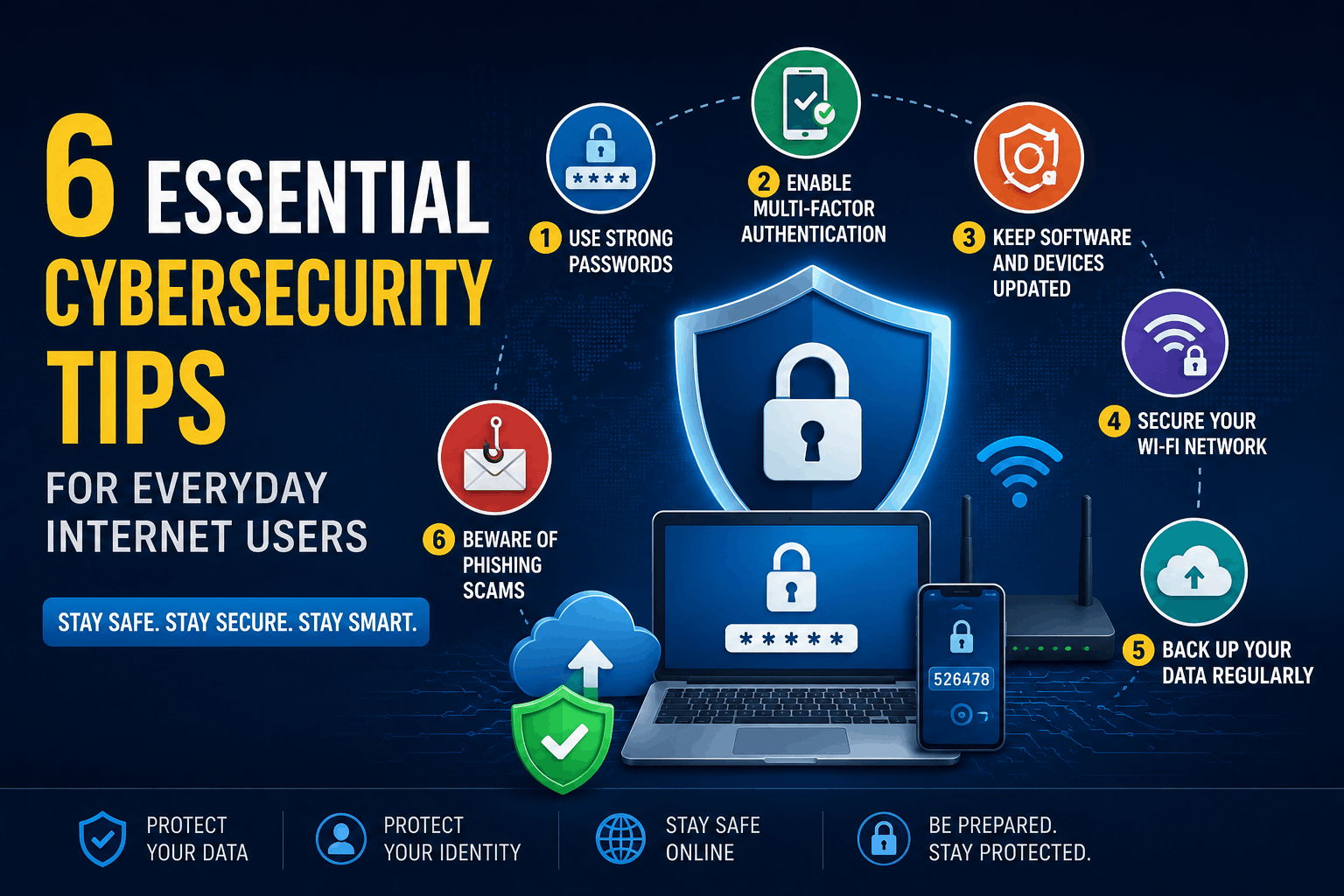
- Use a password manager to create strong, unique passwords and turn on multi‑factor authentication on every account that supports it.
- Keep your devices, apps, and router updated automatically; always back up your files so ransomware can’t hold you hostage.
- Learn to spot phishing emails — the number one way hackers trick everyday users — and never click unsolicited links or attachments.
Key Point
- Most account takeovers happen because passwords are reused. A password manager fixes that.
- Multi‑factor authentication blocks 99.9% of automated attacks, even if your password leaks.
- Phishing emails aren’t always obvious — roughly 1 in 5 people click them. That’s why you need a skeptical eye and a backup plan.
- Good backups mean you never have to pay a ransom. Industry data shows 73% of organizations restore data without paying attackers when they have solid backups.
Table of Contents
- What You’ll Need
- Step 1: Strengthen Your Account Defenses
- Step 2: Fortify Your Devices and Network
- Step 3: Outsmart Phishing and Social Engineering
- Common Mistakes and How to Fix Them
- What to Do Next
What You’ll Need
You’ll land through this entire plan in about 30 minutes — using nothing more than, hmm. Let me put it differently, a computer or smartphone and a willingness to spend a bit of upfront effort.
- A primary device (laptop, desktop, tablet, or phone) you use daily.
- An email account you want to secure (Gmail, Outlook, Yahoo — any provider).
- A password manager — free and paid options like Bitwarden, 1Password, or the built‑in manager in your phone or browser.
- An authenticator app such as Google Authenticator or Authy for one‑time codes.
- Your home Wi‑Fi router admin credentials (usually printed on the router itself).
- An external hard drive or a cloud backup provider like Backblaze or Google Drive.
You don’t need any technical background. Just follow each step, and you’ll be lightyears ahead of the average user.
Step 1: Strengthen Your Account Defenses
Setting that to the side, start with the single most impactful move: get a password manager and turn on multi‑factor authentication (MFA), so together, these two things shrink your attack surface, so dramatically that most automated hacking tries simply fail.
In tons of cases, plus, i know. The “long and unique” part sounds like a memory nightmare. That’s exactly why password managers exist.
They generate and store 12‑character (or longer), you know what, passwords packed with uppercase, lowercase, numbers, and symbols. You only need to remember one master password, so when I first set my parents up with Bitwarden, my dad stared at the truly screen like it was a ransom note.
Once your passwords are handled, turn on MFA everywhere you can. Email, banking, social media, even shopping sites. Worth considering. MFA adds a second proof of identity. Usually a code from an app. Or a security key, after you enter your password.
That’s not marketing fluff; it’s a verified statistic. That’s not a small shift.
You could say and I couldn’t get into my email for hours), save backup codes or set a secondary recovery method.
Is a password manager really safe?
Yes, when you pick a well‑known one with zero‑knowledge architecture. The thing is, cloud‑based managers like 1Password or Bitwarden encrypt everything locally. Before syncing, so even the company can’t read your data. The biggest risk is forgetting your master password. Stats confirm it, but most services offer emergency recovery kits you can print out.
What if I lose my phone and can’t get MFA codes?
In real-world terms, you’ll use those backup codes I mentioned — and after enabling MFA, download or print the 8‑digit recovery codes and store them somewhere secure; a safe at home, a locked drawer.
If you lose your phone. Entering a backup code gets you back in immediately. Most apps also let you add a second device (like a tablet) as a backup authenticator.
Step 2: Fortify Your Devices and Network
Software updates, secure Wi‑Fi, and regular backups form a protective bubble around your digital life. Ignore them, and you leave doors wide open for ransomware and network snoops.
To start, turn on automatic updates on every device, and app you own. Manufacturers push out patches as soon as they discover vulnerabilities. Delaying an update by even a few days can leave you exposed to known attacks. CISA experts stress that third‑party update sites are unreliable.
Without fail update hands-on from your device’s settings. Or the official app store. Then a neighbor’s laptop got hit by a malware strain that exploited a bug patched two months earlier.
Which brings up an interesting point. He lost his entire photo library.
As it turns out, since then, I set all my devices to update overnight.
This brings us back to what we started with. Next, secure your home Wi‑Fi. Log into your router’s admin panel and change the default password immediately. Those are published online and a child could find them. Then make sure your security protocol is WPA3. If your router only supports WPA2.
WPA3 blocks KRACK and similar attacks that can intercept your traffic on older networks… create a separate guest network for smart speakers, cameras.
Guests so that a compromised IoT device can’t reach your personal computer.
Now the part nobody wants to think about: backups. Ransomware criminals count on you not having copies.
Back up your important files to an encrypted external drive and a secure cloud service. Too early to call. The cloud option ensures you can recover everything if your house burns down. Or your (which completely makes sense logically) laptop is stolen. Statistics show that 73% of organizations with good backups restore data without paying a ransom. Not exactly what you’d expect.
You want the same peace of mind. I schedule my backups to run every Sunday evening. It takes five minutes to set and forget.
Do I really need a VPN for public Wi‑Fi?
As far as I know, and free, reputable options like ProtonVPN encrypt your traffic, so that anyone sniffing the coffee shop network sees only scrambled data. Turn it on before you connect to any public hotspot, and that said. A VPN doesn’t replace any of the steps above, it’s like a seatbelt, not an airbag.
That’s where advanced apps come in. AI in cybersecurity detects and stops threats before they spread. Analyzing network traffic for suspicious patterns the second something odd appears. If you want to understand how that works, check out AI in cybersecurity detects and stops threats. The key here is that it adds an extra layer of defense when your own vigilance slips.
Step 3: Outsmart Phishing and Social Engineering
For all intents and purposes, phishing emails are; hands down; the most common way ordinary people get compromised. Attackers craft messages that look exactly like they came from your bank. Your boss, or even a family member. Your job is to develop knee‑jerk skepticism.
Still, never click a link. From a practical standpoint, or open an attachment in an unsolicited email, text, or social media message. Instead, manually type the company’s website into your browser or — or at least, call the person straight up using a number you already have.
QR codes? Same rule; criminals are printing fake ones on parking meters.
And restaurant tables, hoping you’ll scan without thinking. This becomes way more relevant in a moment.
Naturally, i once received an email that appeared to be from my internet provider. Warning me my service would be cut off unless I updated my payment details. ” That split‑second check saved me from handing my (and the data generally agrees) credit card to a scammer.
How can I spot a phishing email in under five seconds?
From a broader view, check the sender’s actual email address; not just the display name. Com,” it’s fake. Hover over any link without clicking and look at the bottom‑left corner of your screen. If the domain looks unfamiliar or contains extra characters, don’t touch it.
Common Mistakes and How to Fix Them
Even careful most of us trip up. Here are the blunders I see most all the time (and that implies quite a bit) and exactly how to recover.
Why did my account lock me out after I turned on MFA?
Now, probably because you lost access to your authenticator device. Use a backup recovery code to sign in, then immediately set up a second authentication method. Like a secondary phone number or a hardware key like a YubiKey. From now on. More importantly, keep at least one backup code in your physical wallet.
I set up a password manager but I keep forgetting the master password.
This happens all the time during the first few weeks, write the master password on a piece of paper, yes, paper — and lock it in a drawer. No hacker can reach your analog paper stash. Once muscle memory kicks in, you can shred the note.
My router doesn’t support WPA3; do I need to buy a new one?
If your router is more than three years old. An upgrade is a good idea even beyond the WPA3 support — but if you can’t replace it right now. At minimum disable WPS. And use a long, random admin password.
Most attacks target outdated firmware anyway. Check your manufacturer’s site for any available updates.
I turned on automatic backups, but they aren’t actually running.
Common culprits: the backup drive is disconnected, or your cloud subscription lapsed. Verify once a weekend that the last backup date is recent. I set a recurring calendar reminder for Sunday morning to glance at the backup log. It’s a 30‑second sanity check.
I clicked a phishing link — what do I do immediately?
Yet, disconnect the device from the internet, run a full antivirus scan, and change your passwords from a different, clean device, so then monitor bank statements. And email login activity for a week. If you gave away credentials. Contact the real company’s support team right away.
What to Do Next
Take this plan and turn it into an afternoon ritual. Sit down with a coffee, open your password manager, and audit every online account.
Enable MFA on the critical ones first, email, banking, cloud storage. Then schedule an hour next weekend to review your router settings and test your backup, and let me tell you. Once you’re set, share these steps with a family member who still uses their dog’s name as a password. You’ll be doing them a massive favor.
- Install a password manager — pick Bitwarden or 1Password and let it generate unique passwords for every account.
- Enable multi‑factor authentication — set up Google Authenticator or Authy on your most sensitive accounts and save backup codes.
- Turn on automatic updates — apply this to your operating system, apps, router, and any smart devices you own.
- Schedule a weekly backup — use an external drive plus a cloud service, and verify it ran successfully.
🔍 Research Sources
Verified high-authority references used for this article
Share This Network Security Guide
Help IT professionals, network engineers, and students strengthen their cyber defense.
Zubayer Hasan
LinkedIn Profile →Md Zubayer AL Hasan is the lead cybersecurity platform architect and security researcher at SafeNetworkHub. Dedicated to zero-knowledge cryptography, infrastructure vulnerability auditing, and building accessible privacy tools.
0 Comments
No comments yet
Have a question or insight about this network security guide? Be the first to share your thoughts!
Write the first comment →